

Quick answer
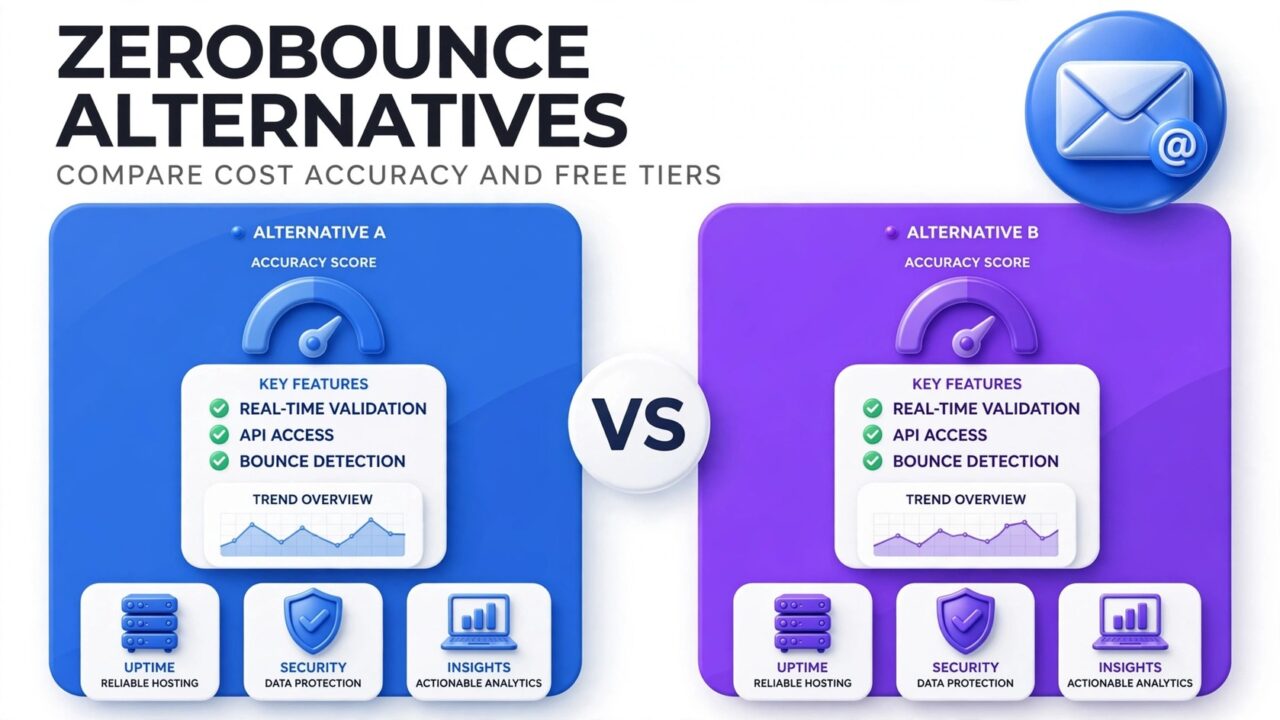
Looking for a ZeroBounce alternative that costs less without trading away accuracy? You’re not alone. ZeroBounce has grown into one of the best-known names in email verification, but its pricing page tells the story: pay-as-you-go runs from $39 for 2,000 credits and reaches $129 for 10,000 — the highest per-address cost on most comparison lists. If you only need core verification rather than a full deliverability suite, several focused tools deliver the same mailbox checks, catch-all detection, and real-time APIs for a fraction of the price.
In this guide we compare 7 ZeroBounce alternatives on true per-email cost, free-tier generosity, credit expiry, accuracy signals, and workflow fit — so you can pick the one that matches how you actually verify lists. And because switching tools mid-year can feel risky, we close with a migration checklist that keeps your lists and reputation intact.
Why people leave ZeroBounce: cost, bundles, and expiring credits
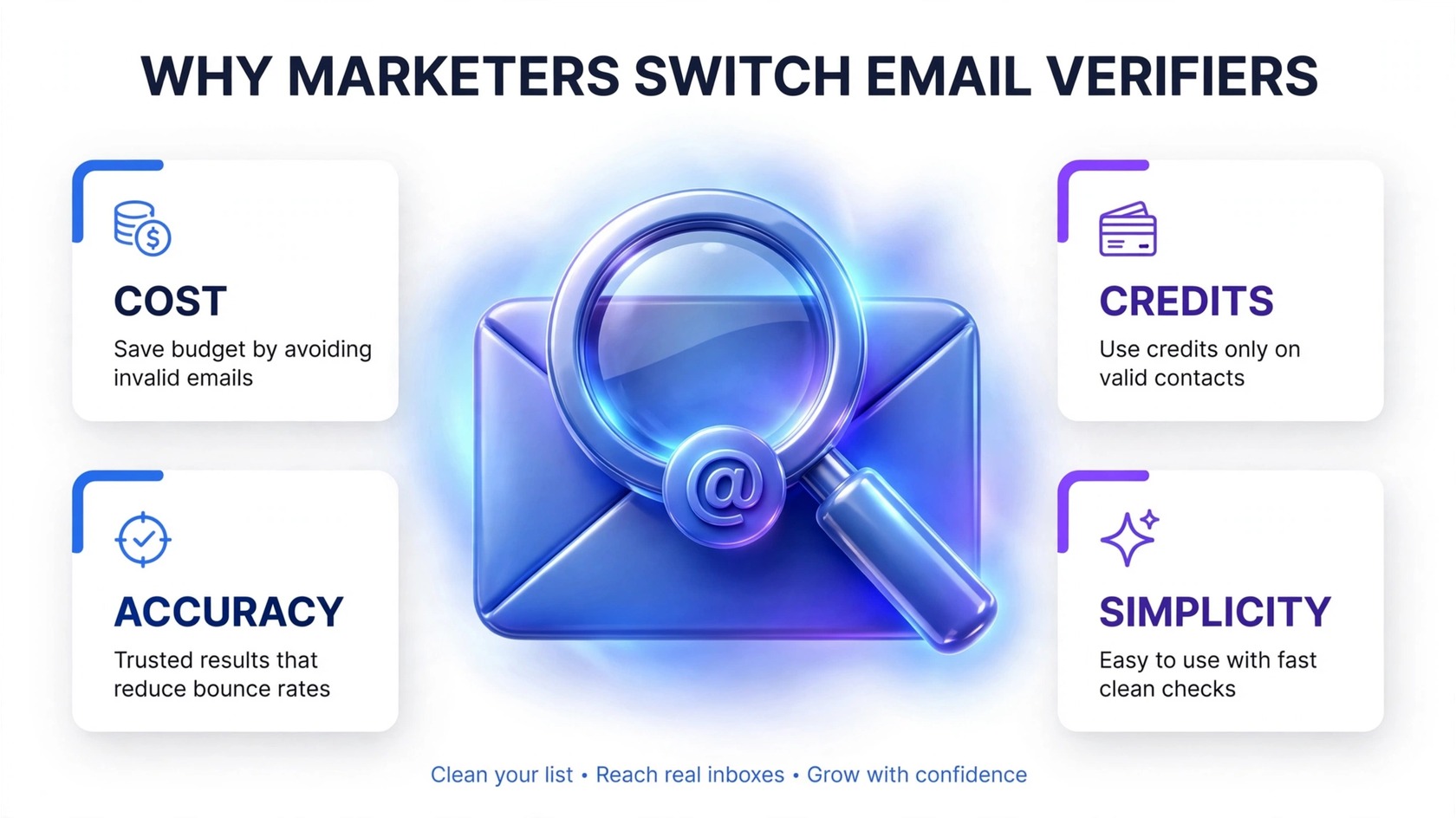
Most marketers don’t leave ZeroBounce because it fails at verification — independent hands-on tests routinely put its accuracy near the top. They leave because of what surrounds the verification:
- The price gap is large: at 10,000 credits, ZeroBounce’s pay-as-you-go rate is $129, while focused alternatives charge anywhere from $25 to $65 for the same volume — roughly two to five times cheaper for the core checks.
- Bundles you may never open: ZeroBounce now ships an email finder, warmup seeds, inbox placement tests, DMARC monitoring, and AI scoring under one login. Powerful — but only worth it if you’d buy those tools anyway. If all you want is “is this address safe to send to?”, you’re subsidizing features you skip.
- Credit expiry catches seasonal senders: several plans wipe unused credits after a period, which hurts teams that verify in bursts before big campaigns rather than on a monthly schedule.
- Setup complexity: the same comparison reviews note that ZeroBounce’s initial setup is more involved than leaner competitors, and validation can be slower on very large lists.
The good news: accuracy parity is real. Multiple 2026 comparison tests (including Sender.net’s hands-on 10-tool test and Mailercloud’s 9-service roundup) show the leading alternatives landing in the same 97–99% accuracy band. The gap between the top tools is rarely about catching bad addresses — it’s about price, credit rules, and workflow. That’s exactly what you should optimize for.
The 7 best ZeroBounce alternatives compared (2026)
We standardized every tool to cost per 10,000 verifications using publicly listed pay-as-you-go rates, and checked free tiers, credit expiry, and one standout strength per tool. Rates change, so confirm on each vendor’s pricing page before buying.
| Tool | ~10K credits (PAYG) | Free tier | Credits expire? | Best for |
|---|---|---|---|---|
| PureListVerifier | Affordable plans (see pricing) | Available | Check plan terms | Simple, dependable bulk verification |
| DeBounce | ~$25 | 100 credits | No (never) | Lowest PAYG price at volume |
| EmailListVerify | ~$27 | 100 credits | No (never) | Budget one-off list cleans |
| NeverBounce | ~$50 | Free trial | Yes (12 months) | CRM auto-sync and integrations |
| Bouncer | ~$60 | 100 credits | No (never) | EU hosting + security reviews |
| Emailable | ~$60 | 250 credits | No (never) | Generous free tier, fast bulk runs |
| Clearout | ~$65 | 100 credits | No (never) | AI scoring for lead prioritization |
| ZeroBounce (baseline) | ~$129 | 100 credits/month | Varies by plan | Full deliverability toolkit |
Mini-reviews: what each ZeroBounce alternative does well
1. PureListVerifier — focused verification, zero bloat
PureListVerifier takes the opposite approach from a suite: it checks your addresses, flags invalid and risky contacts, and hands you a cleaner list before you send. The credit system is simple, bulk uploads are the core workflow, and nothing distracts from the job. If your reason for leaving ZeroBounce is “I just need verification”, a focused tool like this is the most direct replacement. Compare PureListVerifier’s pricing against the per-10K figures above and run the math at your own volume.
2. DeBounce — the price leader
At roughly $25 per 10,000 credits with never-expiring pay-as-you-go credits, DeBounce is the cheapest serious option in this comparison — less than a fifth of ZeroBounce’s per-address rate. It covers the essentials (syntax, domain and MX checks, disposable detection, free dedupe) and includes the API on every plan. The trade-off is a smaller integration library than the premium players, so check your ESP is covered before committing.
3. EmailListVerify — the budget veteran
EmailListVerify has competed on price for years: about $27 per 10,000 credits, never-expiring, with a free 100-credit tier and a free supporting toolkit (DMARC/SPF generators, blacklist checker, MX lookup). It’s the pick for agencies cleaning client lists one-off at high volume, where per-address cost dominates every other consideration.
4. NeverBounce — best for keeping the CRM clean automatically
Owned by ZoomInfo, NeverBounce is built around connected systems rather than manual uploads: on its Growth plan it auto-syncs with your CRM or email platform so new contacts get verified as they arrive. With 80+ integrations, typo correction, and company-name extraction, it fits sales ops teams best. Watch the fine print: it’s the only tool here whose pay-as-you-go credits expire (12 months), which penalizes infrequent verifiers.
5. Bouncer — the compliance-safe pick
Bouncer is a European company, and that’s its selling point: EU data hosting, GDPR compliance, and SOC 2 certification make it the easiest verifier to get through a vendor security review. Its toxicity check flags spam traps, litigators, and serial complainers — addresses that are technically valid but dangerous to mail. At ~$60 per 10,000 credits with credits that never expire, it’s pricier than the budget options but roughly half of ZeroBounce.
6. Emailable — the most generous free tier
Emailable’s 250 free credits are the largest starting allowance on this list, and it refunds “unknown” results, so you only pay for addresses it can actually judge — a real saving on lists heavy with corporate catch-all domains. It’s also among the fastest bulk processors tested. At ~$60 per 10,000 credits with non-expiring PAYG credits, it balances try-before-you-buy with sane ongoing pricing.
7. Clearout — scoring, not just cleaning
Clearout’s AI verdict gives each address a predicted deliverability score instead of a flat valid/invalid, which helps sales teams decide which segments to contact first. Add a Google Sheets add-on, an email finder, and ~$65 per 10,000 never-expiring credits, and it’s the best ZeroBounce alternative for lead-gen teams that want prioritization built into the clean.
How to switch without breaking your workflow
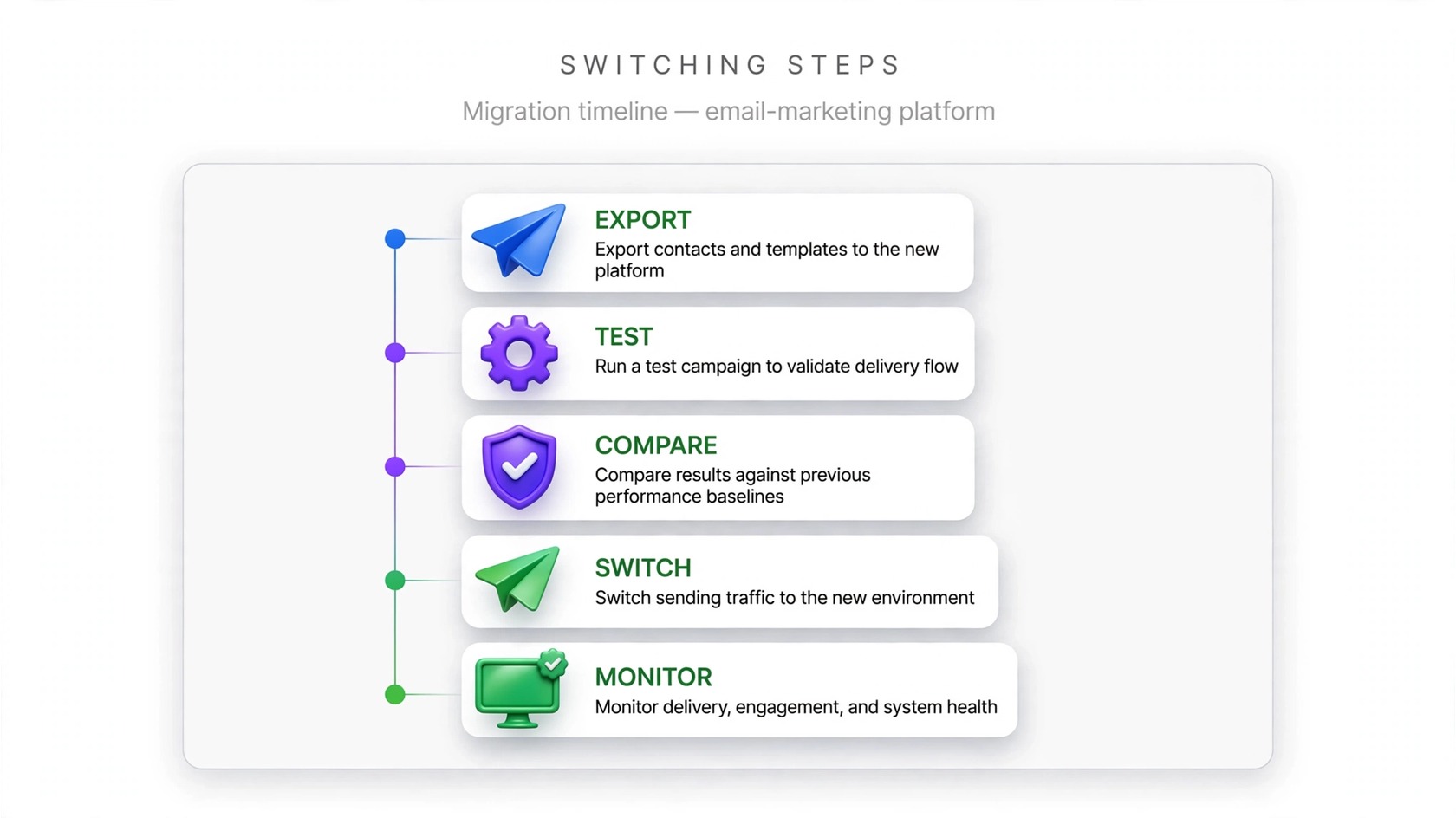
Verification tools all consume CSVs and export results — migrating is usually a half-day job, not a project. But do it in the wrong order and you’ll burn credits re-verifying or, worse, send to an uncleaned list. Follow this order:
- Export your suppression data first. Before leaving ZeroBounce, export your suppression lists and bounce logs. You don’t want to re-verify addresses you already know are dead.
- Run a head-to-head test on one segment. Take 500–1,000 addresses with known outcomes (a mix of valid, invalid, catch-all, and disposable) and run them through your chosen alternative’s free tier. Compare the catch rates — that’s your accuracy baseline, on your data.
- Map your integrations. If you used ZeroBounce’s API at signup or its native ESP connectors, confirm the replacement supports the same touchpoints. Most alternatives offer REST APIs and Zapier/Make connectors; check the docs rather than assuming.
- Re-verify, don’t import old results. Statuses from another tool don’t transfer reliably — run your active list fresh through the new tool rather than carrying old “valid” labels forward.
- Suppress, then send in a controlled ramp. Remove invalid, risky, and spam-trap-flagged addresses first, then resume sending and watch bounce rates for two to three campaigns. A fresh verifier sometimes flags addresses your old tool passed — that’s the point.
What to test with free tiers before you pay
Free tiers exist so you don’t have to trust marketing claims. Use yours deliberately:
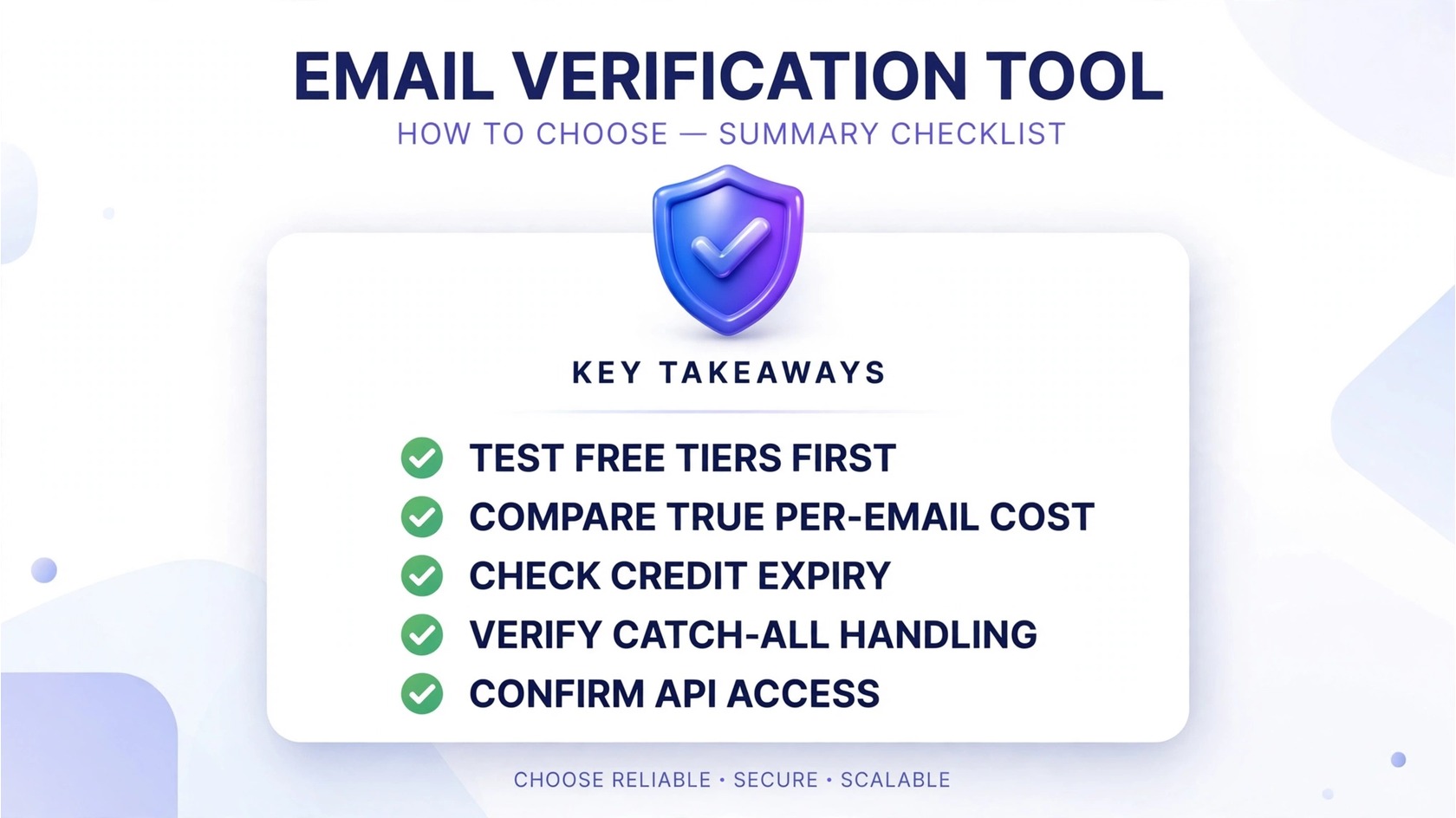
- Catch-all handling: include 20–30 known catch-all domains and check whether the tool flags them as risky or blindly marks them valid — this is where tools differ most.
- Unknown/result granularity: “unknown” shouldn’t cost you. Note which tools charge for inconclusive results and which (like Emailable) refund them.
- Export format: confirm the CSV export keeps your original columns (custom fields, tags, subscriber IDs) so re-importing into your ESP is painless.
- API round-trip time: if you verify at signup, ping the real-time endpoint from your form flow and time the response — a slow verifier adds friction to registration.
One more habit worth building: re-verify on a schedule. Lists decay as people change jobs and abandon addresses, so whatever tool you pick, clean new signups in real time and re-run the full list every few months. For background on the process itself, see our guide to what email verification is and how it differs from validation in verification vs. validation.
FAQs
What is the best ZeroBounce alternative?
It depends on your constraint. For the lowest price per address, DeBounce and EmailListVerify lead. For a generous free tier and fast bulk processing, Emailable stands out. For EU hosting and compliance reviews, Bouncer is the safest pick. And if you simply want focused, dependable verification without a bundled suite, PureListVerifier is worth comparing — see the pricing page for current rates.
Are ZeroBounce alternatives as accurate as ZeroBounce?
Essentially yes for the leading options. Independent 2026 comparison tests, including Sender.net’s hands-on test of 10 tools, place the top alternatives in the same 97–99% accuracy band as ZeroBounce. The practical differences are price, credit expiry, and catch-all handling — test those on your own data with free tiers.
Why is ZeroBounce more expensive than alternatives?
Because you’re buying a suite, not just verification. The fee bundles an email finder, warmup seeds, inbox placement tests, DMARC monitoring, and AI scoring. At 10,000 credits, that works out to about $129 pay-as-you-go — roughly two to five times the focused alternatives. It’s good value only if you’ll actually use the extras.
Can I switch email verification tools without losing my lists?
Yes. Export your contacts and suppression lists from ZeroBounce first, then run your active list fresh through the new tool — don’t import old verification statuses, since scoring models differ. Expect the migration to take a few hours, most of it waiting on the first bulk job.
Do alternative verification credits expire?
Most don’t. Bouncer, Emailable, Clearout, DeBounce, and EmailListVerify all offer non-expiring credits on pay-as-you-go plans. NeverBounce’s PAYG credits expire after 12 months, so seasonal senders should weigh that before choosing it.
Is there a free ZeroBounce alternative?
Every tool here offers a free starting tier — Emailable’s 250 credits is the most generous, while Bouncer, Clearout, DeBounce, and EmailListVerify offer 100 each. That’s enough to run a head-to-head accuracy test on a real segment before spending anything.
Will switching affect my sender reputation?
Switching tools doesn’t affect reputation; sending to bad addresses does. Verify the full list fresh on the new tool, suppress risky addresses, and watch bounce rates on your first few campaigns. Done properly, a switch usually improves deliverability because you stop paying for stale statuses.
What’s the difference between email verification and validation when comparing tools?
Validation typically covers basic technical checks (syntax, domain, MX records), while verification goes further with mailbox-existence checks plus risky-address detection (disposable, catch-all, spam traps). When comparing a ZeroBounce alternative, confirm which checks are actually included — that’s where cheaper tools sometimes cut corners.
The bottom line
ZeroBounce is a capable tool with a premium price that only makes sense if you use its bundled extras. For everyone else — marketers who just need clean lists — a focused ZeroBounce alternative delivers the same core checks at half the cost or less, often with non-expiring credits and a more generous free tier. Test two finalists on the same 500-address sample, compare catch rates on catch-alls and spam traps, and let the data pick your winner. Ready to try the simple route? See PureListVerifier’s pricing and clean your first list today.
