

Quick answer: which one should you pick?
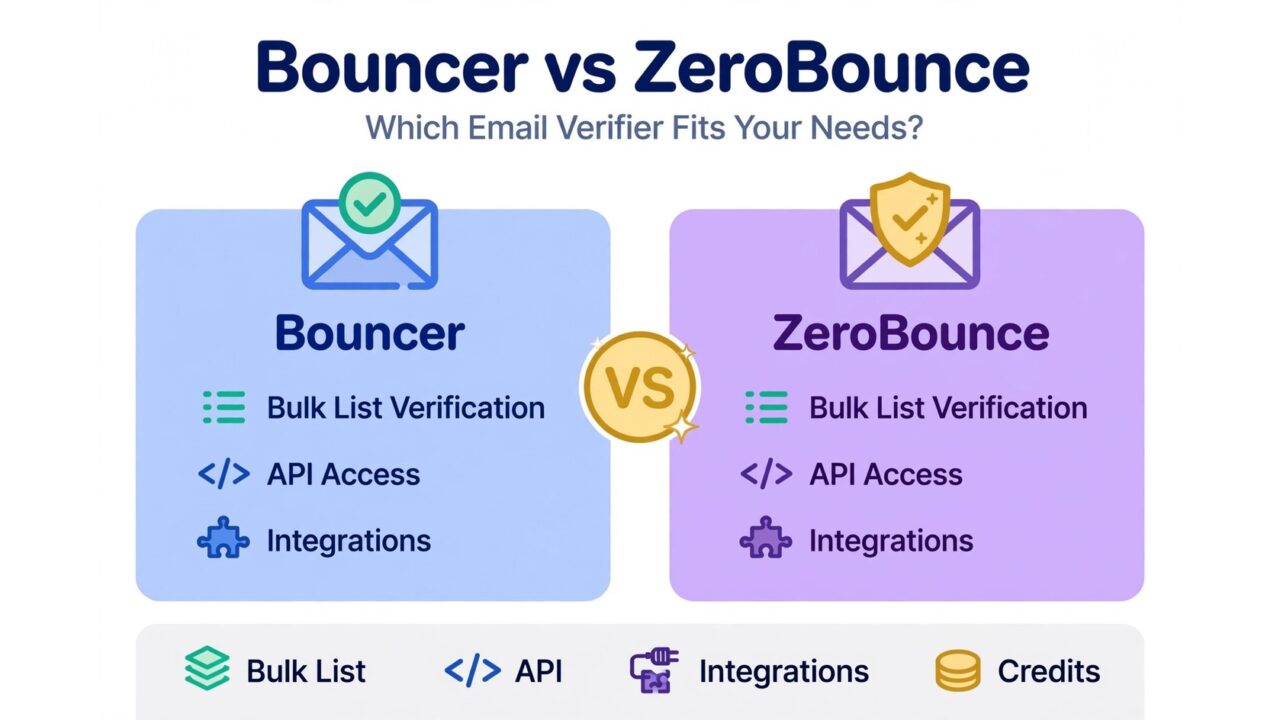
If you are choosing between Bouncer and ZeroBounce, the right pick depends on how you verify, how often you verify, and what else you need beyond a simple valid or invalid result. Bouncer is best known for a clean, focused verification workflow. ZeroBounce is best known for pairing verification with extra data and deliverability services. The wrong choice is skipping verification altogether.
Bouncer vs ZeroBounce: comparison at a glance
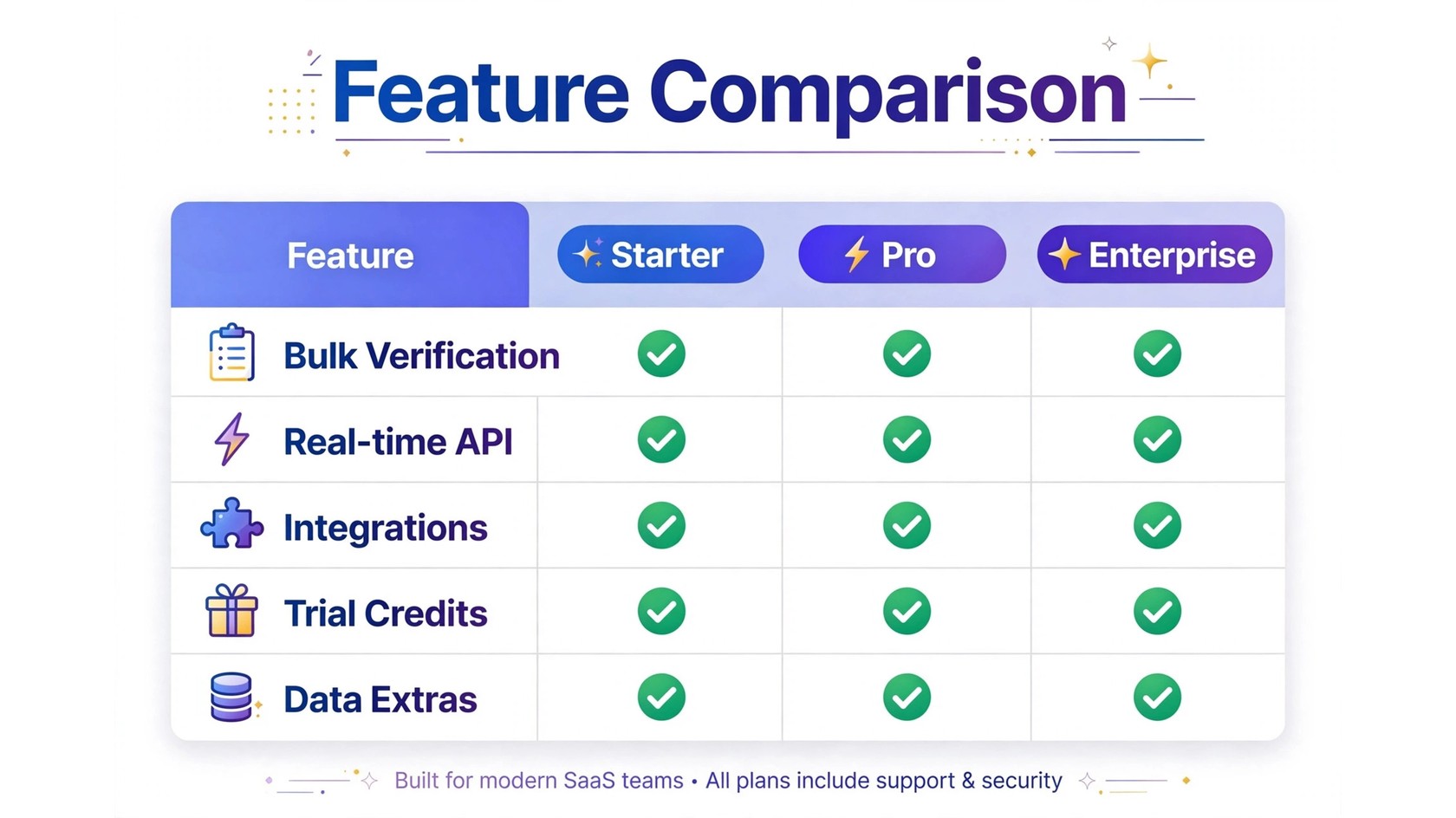
| Feature | Bouncer | ZeroBounce |
|---|---|---|
| Bulk list verification | Yes, upload a list and verify in bulk | Yes, upload a list and verify in bulk |
| Real-time API verification | Yes, API for signup forms and apps | Yes, API for signup forms and apps |
| Integrations | Integrations with common email and marketing tools | Integrations with common email and marketing tools |
| Trial or free credits | Starting credit option, check current terms | Starting credit option, check current terms |
| Data extras | Focused mainly on verification | Verification plus extra data and deliverability services |
| Pricing model | Credit-based, pay for what you verify | Credit-based, with subscription options for regular use |
| Best for | Teams that want simple, focused verification | Teams that also want enrichment and deliverability tools |
If you are new to verification, start with our guide on the best email verification tools. If price is your main constraint, read our cheapest email verification tools comparison before you commit to a plan.
What Bouncer is
Bouncer is an email verification service built around one clear job: tell you whether an email address is safe to send to. You upload a list, or you connect the API to your signup form, and Bouncer checks each address and returns a status such as deliverable, risky, or undeliverable. You verify, you remove the bad addresses, and you send to a cleaner list.
Its verification covers the standard layers: syntax checks, domain and MX record checks, and SMTP-level checks that confirm whether the mailbox can receive mail. It also flags catch-all domains and other risky categories.
What ZeroBounce is
ZeroBounce is also an email verification service, but it positions itself as a broader platform. Verification is the core, and around that core it offers extra services such as email scoring, data enrichment, and deliverability tools. The idea is that one account can cover more of the journey from list upload to inbox.
Like Bouncer, ZeroBounce checks syntax, domain and MX records, and mailbox deliverability. It also flags categories such as catch-all, disposable, and abuse addresses so you can segment or suppress them. That breadth is useful if your team wants one vendor for several jobs, and more than you need if you only verify a list once a month.
Bulk verification: how each tool handles big lists
Bulk verification is the core job for most buyers. You have a list, often thousands of addresses, and you need to know which ones are safe to send to before your next campaign. Both tools handle this the same way at a high level. You upload a CSV or connect an integration, the tool verifies each address, and you download a cleaned file with statuses attached.
The differences show up in workflow details. Check how each tool handles duplicates, how it labels risky categories, and how easy it is to export only the safe addresses. A good bulk workflow keeps your original file intact and shows a clear breakdown by category.
Real-time API: catching bad emails at signup
Bulk verification cleans the list you already have. Real-time API verification stops bad addresses from entering your list in the first place. You connect the API to your signup form, checkout page, or lead capture form, and each address is checked as the user submits it. Invalid addresses are rejected or flagged on the spot.
Both tools offer a real-time API. When you compare them, look at three practical things: documentation quality, response speed, and flexibility over risky addresses.
Integrations: do they fit your stack?
A verification tool is only useful if it connects to the tools you already use. Both Bouncer and ZeroBounce offer integrations with common email service providers, marketing automation platforms, and CRM systems. The exact list changes over time, so check each vendor’s integration page for the tools you use rather than relying on a comparison article alone.
If your contacts live in one email platform, a direct integration that lets you verify without exporting and importing files will save time and reduce errors. If you use a less common platform, confirm the integration before you buy with a small live test.
Trial and credits: how to test before you pay
Both Bouncer and ZeroBounce offer a way to try the service before you commit. The exact terms change over time, so treat any specific credit count you read in an older article as outdated. Check each vendor’s current signup page for the latest trial or starting credit offer, and use the trial to run a real test, not a toy test.
Take a list you already know well, ideally one with a mix of valid addresses, obvious typos, and a few old addresses you suspect are dead. Run it through the tool and check whether the results match what you already know. Then run the same test list through both tools and compare the results side by side.
Data extras: where ZeroBounce pulls ahead, and where it may not matter
The biggest structural difference between the two tools is breadth. Bouncer stays focused on verification. ZeroBounce adds services around verification, such as scoring, enrichment, and deliverability monitoring. If you need those extras, ZeroBounce can replace more than one subscription. If you do not need them, they are not a reason to pay more.
Enrichment adds data to a contact, such as a name or company. Scoring estimates how engaged a contact may be. Deliverability tools check whether your emails land in the inbox, the spam folder, or nowhere at all. Before you pay for extras, ask whether someone on your team will open the feature every week. If not, a focused verification tool is usually the simpler and cheaper path.
Pricing model: credits, subscriptions, and what to watch
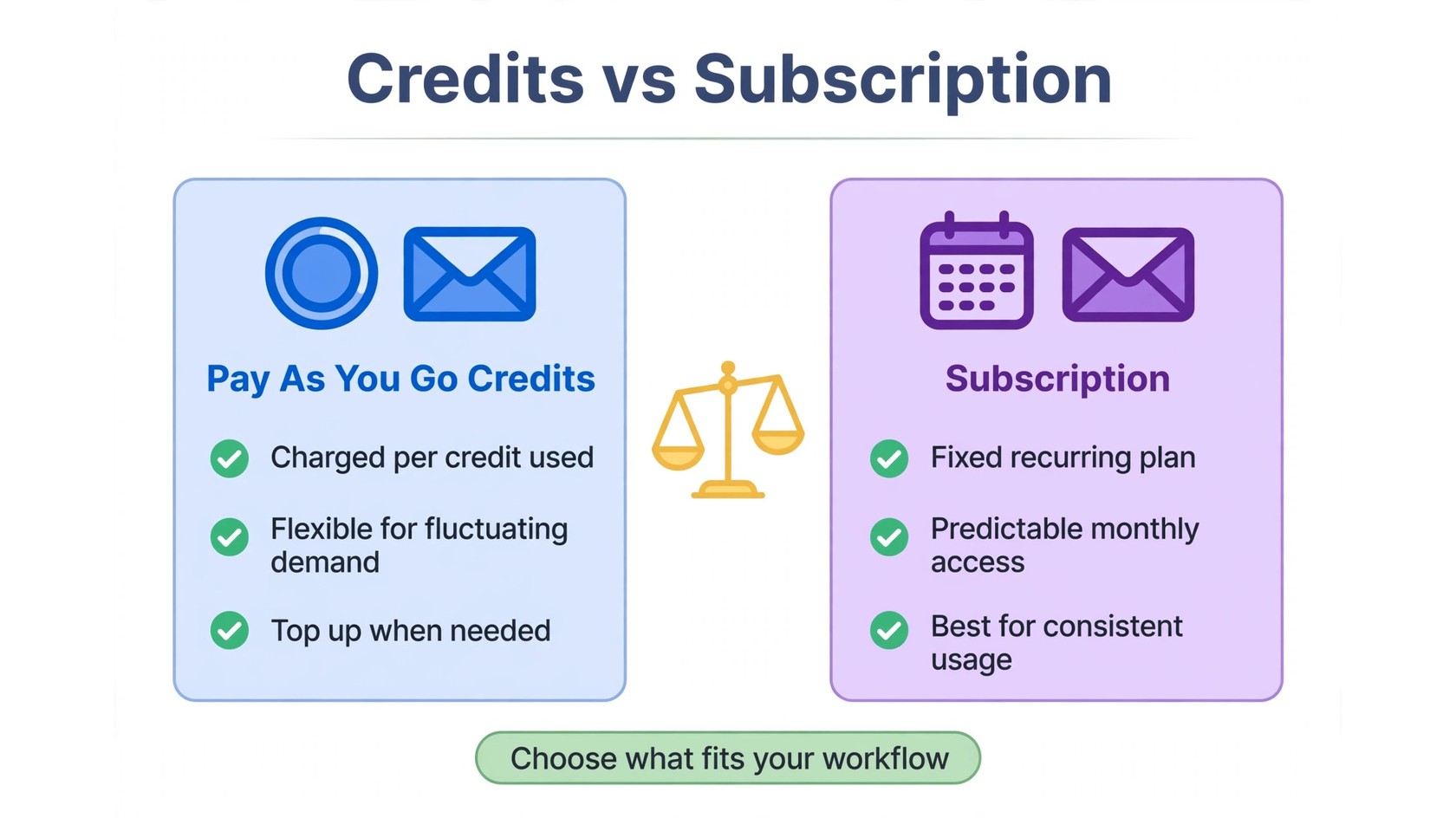
Both tools use a credit-based model at their core. You buy credits, and each verified email consumes one credit. This model is simple and fair for occasional use. For regular use, subscriptions can lower the per-credit cost, because you commit to a monthly volume in exchange for a better rate.
Do not compare headline prices alone. Check whether unused credits expire, whether bulk and API verifications are charged differently, and whether extra services carry separate charges. For current numbers, check Bouncer’s pricing page and ZeroBounce’s pricing page directly. For a broader view, see our email verification pricing guide.
How to choose: a simple decision framework
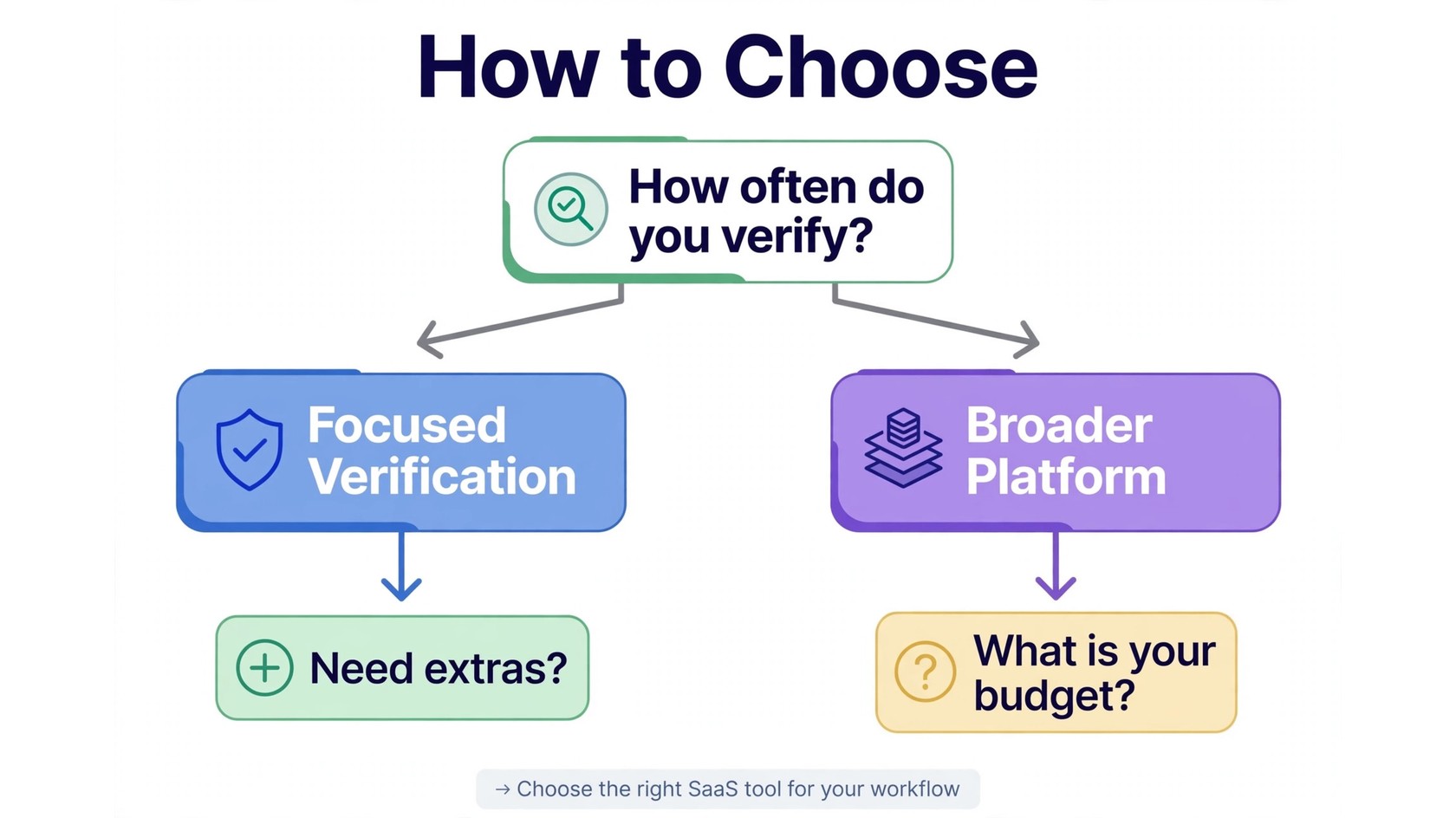
How often do you verify? Once a quarter or less, pay-as-you-go credits are usually the best fit. Every week, a subscription with a lower per-credit cost will usually save money.
Do you need extras, or only verification? If you only need to know which addresses are safe to send to, choose the simpler tool. If you also need enrichment, scoring, or inbox placement testing in one account, the broader platform is the better fit.
Where do bad emails enter your list? If most bad emails come from a signup form, prioritize the real-time API. If they come from purchased or scraped lists, prioritize bulk verification and clear risky labels.
What does your team already use? A tool that connects to your email platform in one click will get used. A tool that requires manual exports will get used once, then forgotten.
What is your real budget? Look at total cost, not headline cost. Include credits, subscription fees, extra services, and the time your team spends on manual work.
If you are comparing more than these two tools, our best email verification tools guide covers the wider field. If you want to see how each of these tools compares to the alternatives, read our ZeroBounce alternatives guide, and our comparison of PureListVerifier vs EmailListVerify for a different angle on the same decision.
A cheaper alternative worth considering
Before you commit to either tool, consider PureListVerifier as a simpler, cheaper alternative. It focuses on the core job: verifying your list, flagging risky addresses, and giving you a clean file you can send to with confidence.
You can explore the features on the features page, see how the process works on the how it works page, and check current plans on the pricing page.
Common mistakes when comparing verifiers
Comparing accuracy claims instead of results. Vendors describe accuracy in different ways, so headline claims are not comparable. Run the same known list through each tool and compare the results yourself.
Ignoring risky labels. A tool that marks every address as either valid or invalid is hiding information from you. Catch-all, disposable, and role-based addresses need different treatment.
Forgetting about list decay. Verification is not a one-time job. Lists decay as people change jobs, abandon inboxes, and unsubscribe. Plan to re-verify regularly.
Verifying but not fixing the source. If bad emails keep entering your list through a signup form, bulk verification alone will not fix the problem. Add real-time API verification at the point of entry.
Choosing on price alone. The cheapest credit is not cheap if the tool misses bad addresses that damage your sender reputation. Judge tools on the quality of their results, not only on the price of their credits.
Frequently asked questions
Which is better, Bouncer or ZeroBounce?
It depends on your needs. Bouncer is a strong pick if you want focused, simple verification. ZeroBounce is a strong pick if you also want enrichment, scoring, and deliverability tools in the same account. Run the same test list through both during the trial period and compare the results for your own data.
Is there a cheaper alternative to Bouncer and ZeroBounce?
Yes. PureListVerifier is a focused, cheaper alternative for teams that mainly need verification without a broad suite of extras. Compare current plans on the pricing page and read our cheapest email verification tools guide for the wider market.
Do Bouncer and ZeroBounce offer free trials?
Both vendors have offered starting credits or trial options in the past, but the exact terms change over time. Check each vendor’s current signup page for the latest offer, and use the trial to test with a real list you know well.
Which integrates with my email platform?
Both tools integrate with common email and marketing platforms, but the exact list changes. Check each vendor’s integration page for the tools you use, and run a small live test before you commit to a plan.
How accurate are they?
Both tools are established verifiers with standard checks including syntax, domain and MX records, and SMTP-level mailbox checks. Headline accuracy claims are not directly comparable across vendors, so test each tool on your own list and compare the results for the categories you care about.
Should I verify my list before every campaign?
You do not need to verify a healthy, recently cleaned list before every single send. Verify before large campaigns, after long gaps, and whenever you add a new source of contacts.
Can I use Bouncer or ZeroBounce with PureListVerifier?
Yes, you can verify with one tool and cross-check a sample with another if you want a second opinion. In practice, most teams pick one primary verifier and stick with it, because switching tools adds work without a clear benefit once you trust the results.
The bottom line
Bouncer and ZeroBounce are both solid email verification tools, and the better choice is the one that matches your workflow. Choose Bouncer if you want focused verification with a clean workflow. Choose ZeroBounce if you want verification plus enrichment and deliverability tools in one account. Consider PureListVerifier if you want a simpler, cheaper focused verifier. Whichever you pick, verify before you send, fix the sources that let bad emails in, and re-verify regularly.
